
What Makes a High-Converting Website? Design, Structure, and Strategy Explained
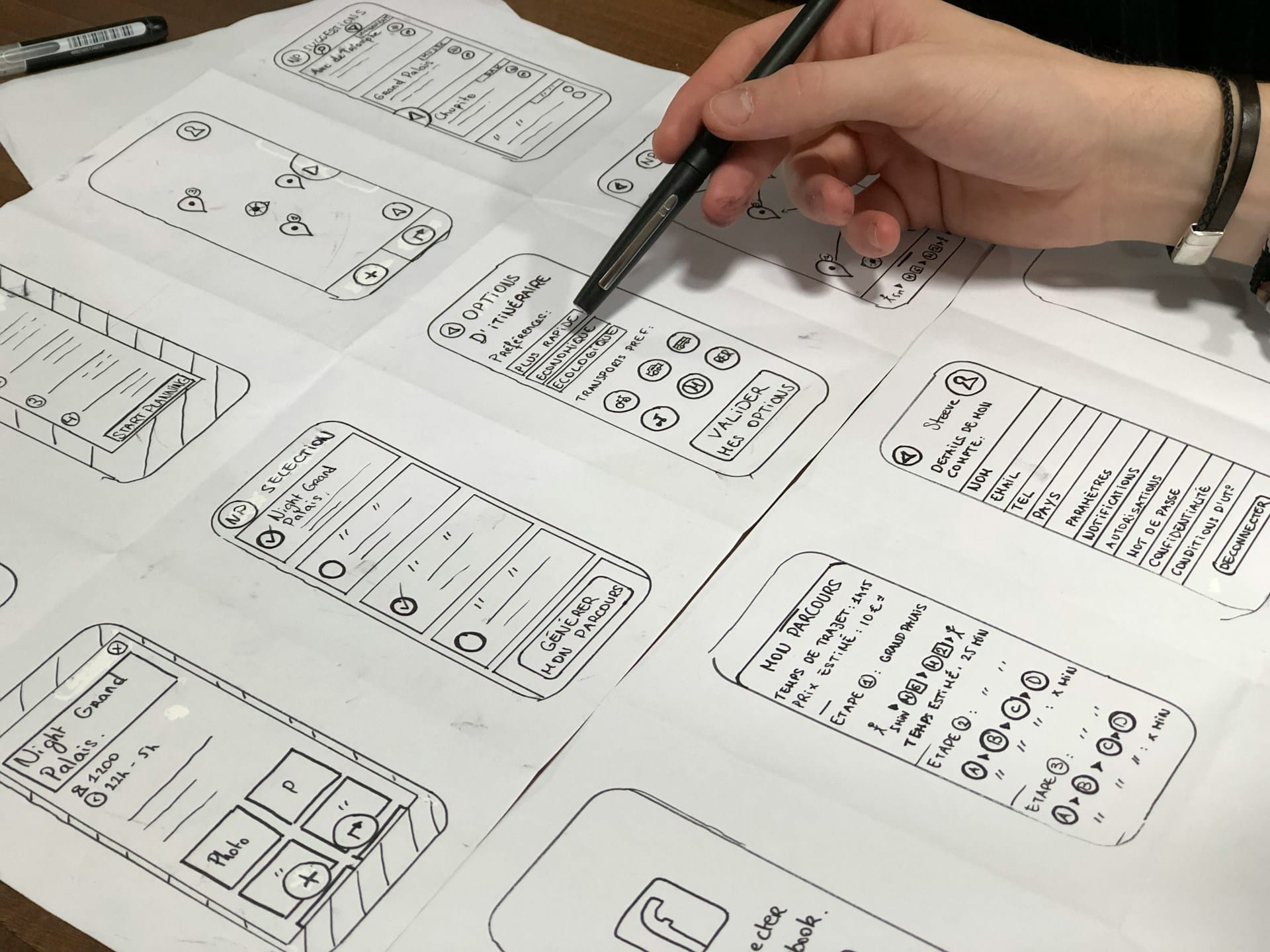
High-converting website design and development turns visitors into customers by matching intent, reducing friction, and increasing decision confidence with proof and clear next steps.
What is a “high-converting website”?
A high-converting website is a site that consistently moves the right visitors to the next action with minimal confusion and maximum trust.
The action depends on business model: purchase, demo request, consultation booking, quote request, or lead capture.
Conversion is not only design. Conversion is a system of intent alignment, information architecture, and proof.
Why do most websites fail to convert even with good traffic?
Most websites fail to convert because the visitor cannot quickly answer: “Is this for me, and can I trust it?”
- Unclear positioning: The site describes features without stating outcomes.
- Too many choices: Multiple CTAs compete and create indecision.
- Weak proof: Claims are not supported by evidence or examples.
- Hidden constraints: Pricing, availability, and policies are unclear.
- Friction: Forms are long, pages are slow, or navigation is confusing.
How does intent matching increase conversion rate?
Intent matching increases conversion by ensuring the page answers the exact question the visitor arrived with.
Intent mismatch looks like sending “pricing” visitors to a generic homepage, or sending “comparison” visitors to a feature page.
Intent match requires one primary promise per page, supported by proof, then one clear next step.
What should appear above the fold on a conversion-focused page?
Above the fold should contain a clear promise, a clear audience, and a clear next step.
- One-sentence value proposition: Outcome + audience + differentiator.
- Proof hint: One credibility signal like a customer count, certification, or recognizable client logo.
- Primary CTA: One action that matches intent: “Book a call,” “Get pricing,” or “Start trial.”
- Secondary CTA: Lower-commitment option if needed, like “See examples.”
Visitors decide quickly whether to continue. Your above-the-fold must remove guessing.
How do trust signals increase conversion?
Trust signals increase conversion by reducing perceived risk and uncertainty.
Trust is built through identity, proof, and policy clarity.
- Identity: Real company info, team visibility, and contact routes.
- Proof: Case studies, testimonials, reviews, awards, and measurable outcomes.
- Policies: Refunds, warranties, SLAs, privacy and security practices.
A site that hides policies forces the visitor to assume the worst.
What website structure supports conversion across multiple pages?
A conversion-supporting structure guides the visitor through a logical sequence of decisions.
- Homepage: Category positioning and routing to key intents.
- Service/Product pages: Scope, outcomes, constraints, and next step.
- Comparison pages: Criteria and trade-offs that create shortlists.
- Pricing page: Plan logic, what is included, and “who it’s for.”
- Proof hub: Case studies and results organized by industry or use case.
- Support/FAQ: Objection handling and operational clarity.
This structure reduces bounce because each page answers the next question.
How do you write copy that converts without hype?
Conversion copy works when it is specific, constrained, and evidence-backed.
- Use outcomes: “Reduce onboarding time by standardizing workflows.”
- State constraints: “Best for teams with at least X volume.”
- Explain process: “Audit → plan → implementation → measurement.”
- Show examples: Screenshots, templates, sample deliverables, or anonymized results.
Hype creates skepticism. Specificity creates confidence.
Which design elements most influence conversion?
The most influential design elements are hierarchy, readability, and interaction simplicity.
- Typography and spacing: Improves scanning and comprehension.
- Button clarity: Clear labels that describe the outcome.
- Forms: Fewer fields, clear error handling, and privacy reassurance.
- Mobile usability: Tap targets, sticky navigation, and readable sections.
How should you measure whether a website is converting well?
You should measure conversion by stage metrics, not only the final sale.
- Micro conversions: pricing clicks, demo clicks, form starts, downloads.
- Macro conversions: purchases, bookings, qualified leads.
- Behavioral signals: scroll depth, time on key sections, return visits.
- Quality metrics: lead quality, close rate, refund rate, churn.
A site can “convert” and still be unprofitable if it attracts the wrong audience.
What is a practical conversion improvement plan?
A practical plan starts with intent mapping, then proof strengthening, then friction removal.
What questions do teams ask about conversion websites?
Is conversion only a landing page problem? No. Conversion is an end-to-end path problem across navigation, proof, pricing, and policies.
Do we need video? Not always. Clear writing, proof, and structure often outperform video-heavy pages.
What is the fastest fix? Improve above-the-fold clarity and reduce form friction first.
Radiant Elephant 35 State Street, Northampton, Massachusetts 01060 (413) 299-5300